
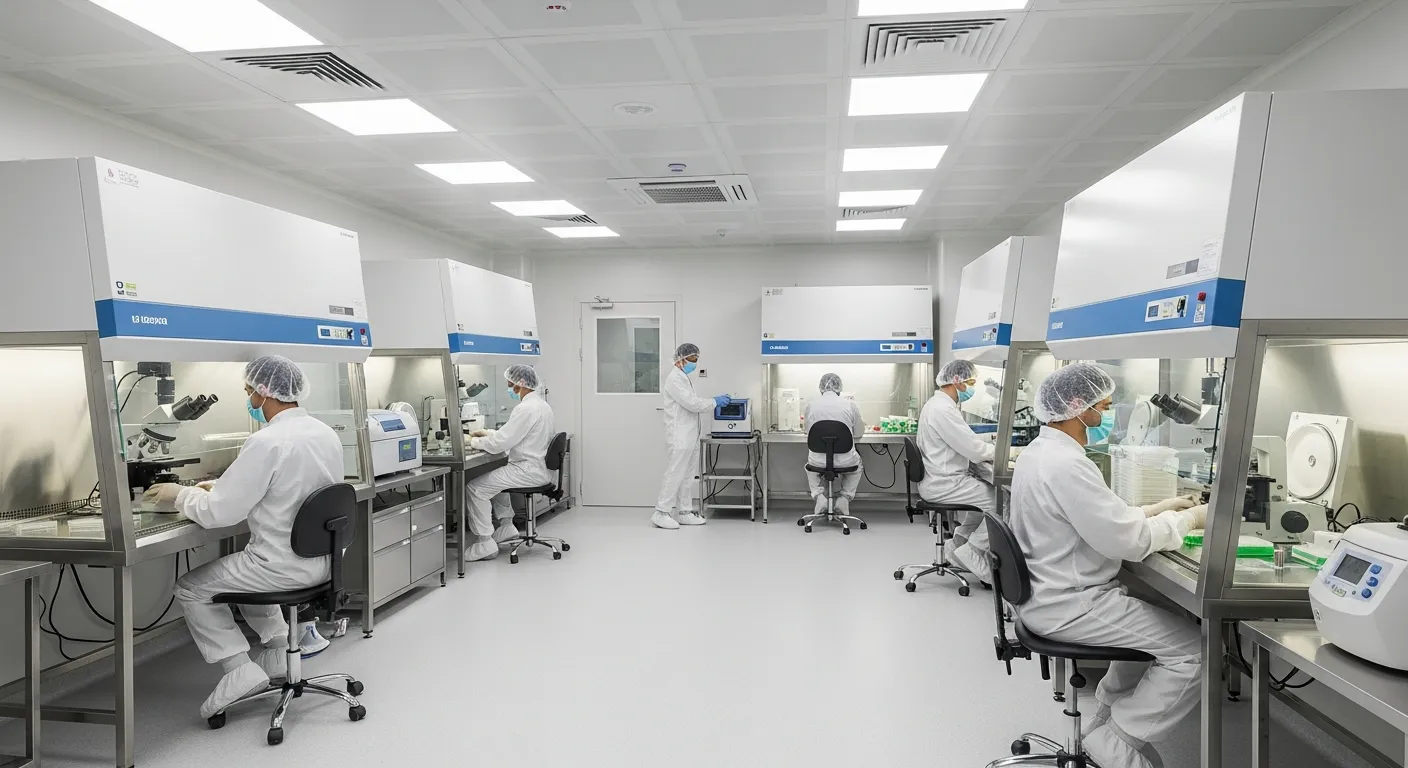
Perché gli Standard GMP della Turchia Superano le Cliniche di Cellule Staminali del 'Wild West'
- Scritto da
- Team editoriale StemCell Longevita
- Revisione medica di
- Team del Prof. Dr. Erdal KaraözProfessore di Istologia ed Embriologia · Direttore medico, Centro di Medicina Rigenerativa
- Ultima revisione
- Prossima revisione programmata
Come valutiamo le prove · Dichiarazione di conflitto di interessi · Standard editoriali
Guida di approfondimento. Per chi si informa prima di decidere.
Come il quadro normativo turco, gli ospedali accreditati JCI e la produzione certificata GMP rendono la Turchia una delle destinazioni internazionali più sicure per la terapia con cellule staminali — e come verificare gli standard effettivi di qualsiasi clinica.
Il Problema del 'Wild West' nella Terapia Internazionale con Cellule Staminali
La terapia internazionale con cellule staminali è uno dei segmenti in più rapida crescita del turismo medico, e purtroppo uno dei meno uniformemente regolamentati. Mentre molte cliniche internazionali forniscono cure eccellenti secondo standard rigorosi, altre operano in zone grigie normative dove la fonte del prodotto cellulare, la qualità di produzione e la supervisione clinica sono essenzialmente inverificabili. I pazienti che viaggiano basandosi solo su affermazioni di marketing possono finire per ricevere trattamenti che hanno poca relazione con quanto pubblicizzato.
Problemi documentati nelle cliniche non regolamentate nell'ultimo decennio hanno incluso: prodotti cellulari di composizione non verificata (in alcuni casi non contenenti nemmeno cellule vive), lavorazione in ambienti non sterili che portano a infezioni, trattamenti eseguiti da non medici in suite d'albergo, nessuna informativa o divulgazione dei rischi, nessuna assistenza post-trattamento e, nei casi peggiori, gravi complicanze tra cui cecità da iniezioni intravitreali di cellule non provate, infezioni che richiedono ricovero ospedaliero e decessi.
L'ambiente normativo in Turchia è fondamentalmente diverso. Le terapie basate su cellule rientrano sotto la supervisione del Ministero della Salute turco, le strutture di produzione richiedono licenze GMP, gli ospedali operano secondo standard di accreditamento definiti e i medici devono essere specialisti qualificati. Questa infrastruttura normativa non garantisce che ogni clinica turca operi secondo i più alti standard, ma fornisce una base verificabile di sicurezza e qualità che non esiste nei mercati non regolamentati.
Il Quadro Normativo della Turchia per la Terapia con Cellule Staminali
Diversi livelli di regolamentazione governano la terapia con cellule staminali in Turchia, creando una responsabilità verificabile.
Supervisione del Ministero della Salute
Tutte le terapie a base cellulare ricadono sotto il Ministero della Salute turco, con percorsi regolatori specifici per prodotti cellulari autologhi, allogenici ed espansi.
Licenza di produzione GMP
I laboratori di elaborazione cellulare devono essere autorizzati GMP dal Ministero della Salute. La licenza richiede specifici standard per struttura, personale, attrezzature e sistema di qualità.
Licenza ospedaliera
La terapia con cellule staminali deve essere eseguita in strutture ospedaliere autorizzate con adeguato supporto di emergenza, non in uffici, hotel o cliniche non autorizzate.
Qualifica del Medico
Il trattamento deve essere supervisionato da medici specialisti qualificati con adeguata formazione in medicina rigenerativa e nella relativa specialità clinica.
Documentazione di Qualità
I prodotti cellulari devono essere documentati con certificati di analisi che coprano sterilità, vitalità, fenotipo e identità per ogni lotto.
Segnalazione di Eventi Avversi
Le strutture autorizzate devono segnalare gli eventi avversi al Ministero, creando una responsabilità e una trasparenza che non esistono in contesti non regolamentati.
Cosa significa 'GMP' nella pratica
Le Good Manufacturing Practice (GMP) sono lo standard globale per la produzione di prodotti medicinali, incluse le terapie cellulari. Le GMP non sono un'etichetta di marketing — sono un quadro normativo completo che copre la progettazione delle strutture (incluse specifiche classificazioni delle camere bianche), la qualificazione delle attrezzature, la formazione del personale, il controllo delle materie prime, la convalida del processo di produzione, i test in-process e di rilascio, la documentazione dei lotti e il monitoraggio continuo della qualità. Ottenere e mantenere l'autorizzazione GMP richiede un notevole investimento continuo.
Per la terapia con cellule staminali in particolare, gli standard GMP affrontano le sfide uniche del lavoro con cellule viventi: conservazione della vitalità cellulare, prevenzione della contaminazione microbica, conteggio e fenotipizzazione accurata delle cellule, controllo dei materiali di origine del donatore e tracciabilità dal donatore attraverso la produzione al ricevente. Ogni lotto di cellule prodotto sotto GMP reca un certificato di analisi che documenta questi parametri.
L'implicazione pratica per i pazienti è che un prodotto cellulare fabbricato secondo GMP è, per definizione, un prodotto conosciuto e verificato. Le cellule sono ciò che il produttore dichiara che siano, nella quantità indicata, prive di contaminazione e che soddisfano soglie di vitalità definite. I pazienti che ricevono cellule GMP in un ospedale accreditato JCI sotto la supervisione di un medico qualificato ricevono un prodotto fondamentalmente diverso da coloro che ricevono cellule non verificate in un ambiente non regolamentato, anche se entrambi sono commercializzati come 'terapia con cellule staminali'.
Accreditamento Ospedaliero JCI: Perché è Importante
Joint Commission International (JCI) è lo standard d'oro globale per la qualità ospedaliera e la sicurezza del paziente. La maggior parte dei principali programmi turchi di cellule staminali opera all'interno di ospedali accreditati JCI.
Standard Verificati
L'accreditamento JCI è concesso solo dopo una rigorosa valutazione in loco rispetto a centinaia di standard dettagliati che coprono sicurezza, controllo delle infezioni, gestione dei farmaci e assistenza clinica.
Verifica Indipendente
A differenza degli 'standard internazionali' autodichiarati, l'accreditamento JCI può essere verificato in modo indipendente su jointcommissioninternational.org da chiunque, ovunque.
Capacità di Emergenza
Gli ospedali JCI dispongono di un supporto di emergenza completo — terapia intensiva, capacità chirurgica, banca del sangue, specialisti in malattie infettive — in caso di complicanze.
Team Multidisciplinari
Medici specialisti, infermieri, farmacisti e professionisti sanitari operano tutti all'interno di quadri di competenza definiti.
Cura Documentata
Ogni aspetto dell'assistenza al paziente è documentato in cartelle cliniche standardizzate, disponibili per il coordinamento continuo delle cure con i medici di base.
Monitoraggio Continuo
L'accreditamento JCI deve essere rinnovato ogni tre anni tramite una valutazione continua, garantendo che gli standard non diminuiscano dopo la certificazione iniziale.
Come vengono realmente verificati i prodotti cellulari
Ogni lotto di cellule utilizzato nella legittima terapia con cellule staminali in Turchia deve superare test di qualità definiti prima del rilascio per uso clinico. Per le cellule staminali mesenchimali, ciò include: conteggio cellulare tramite metodi di conteggio automatizzati validati; valutazione della vitalità (tipicamente richiede più dell'80% di cellule vitali); conferma del fenotipo mediante citometria a flusso rispetto ai criteri della International Society for Cellular Therapy (CD73, CD90, CD105 positivi; CD34, CD45, CD11b, CD19 negativi); test di sterilità per contaminazione batterica, fungina e da micoplasma; test delle endotossine entro limiti definiti; e test di identità che confermano che le cellule sono ciò che si dichiara che siano.
Il certificato di analisi che documenta questi parametri è un documento reale che qualsiasi clinica legittima può fornire per le cellule che riceverete. I pazienti dovrebbero sempre richiedere e rivedere questo documento. Una clinica che non può fornire un certificato di analisi o non utilizza cellule prodotte GMP o opera al di fuori degli standard di qualità appropriati.
Per i protocolli autologhi in cui vengono utilizzate le cellule del paziente stesso, si applicano gli stessi principi di test nei punti pertinenti del processo — test di qualità dell'aspirato o del campione raccolto, convalida del metodo di elaborazione e conferma del prodotto finale prima della reintroduzione. Anche i protocolli autologhi richiedono una supervisione della qualità; non sono esenti dai principi GMP.
Clinica Turca Regolamentata vs Clinica Internazionale Non Regolamentata
Clinica Turca Regolamentata
- Prodotto cellulare fabbricato GMP con certificato di analisi del lotto
- Ospedale accreditato JCI con supporto di emergenza
- Medici specialisti qualificati con credenziali documentate
- Vigilanza normativa del Ministero della Salute
- Consenso informato documentato nella lingua del paziente
- Segnalazione di eventi avversi e responsabilità
- Accreditamenti e licenze verificabili
Clinica 'Far West' non regolamentata
- Prodotto cellulare non verificato, spesso senza certificato di analisi
- Trattamento in uffici, hotel o strutture senza licenza
- Credenziali mediche poco chiare o 'operatori' non medici
- Operare in zone grigie normative
- Processo di consenso informato limitato o assente
- Nessuna responsabilità in caso di problemi
- Affermazioni non verificabili sulla qualità e le credenziali
La tua checklist per la verifica della clinica
Prima di prenotare un trattamento in qualsiasi paese, inclusa la Turchia, dovresti essere in grado di verificare ciascuno dei seguenti punti.
Domande Frequenti
Coordinamento Internazionale dei Pazienti
StemCell Longevita opera come piattaforma di coordinamento internazionale dei pazienti. Mettiamo in contatto i pazienti con istituzioni mediche autorizzate che offrono applicazioni di medicina rigenerativa dopo valutazione medica e nel rispetto dei quadri normativi applicabili. Tutte le decisioni e le procedure mediche sono condotte esclusivamente da professionisti sanitari autorizzati. StemCell Longevita non fornisce direttamente trattamenti medici.
Dichiarazione di non responsabilità medica
Le informazioni fornite su questo sito web sono a scopo puramente educativo e informativo e non intendono costituire consulenza medica. La terapia con cellule staminali è un campo in evoluzione e i risultati possono variare da individuo a individuo. I trattamenti descritti su questo sito non sono stati completamente valutati o approvati dalla FDA o da organismi di regolamentazione equivalenti in tutte le giurisdizioni.
La FDA non ha approvato le applicazioni di cellule staminali per la maggior parte delle condizioni elencate su questo sito web. I risultati menzionati si basano su osservazioni cliniche, ricerche pubblicate e risultati riportati dai pazienti. I risultati individuali possono variare e nessun esito specifico è garantito per alcun singolo paziente.
L'inclusione di pubblicazioni scientifiche su questo sito non implica approvazione normativa o risultati clinici garantiti. Alcune applicazioni possono essere considerate sperimentali a seconda dell'indicazione e della giurisdizione.
Consultare sempre un professionista sanitario qualificato prima di prendere qualsiasi decisione medica. Non ignorare i consigli medici professionali o ritardare la ricerca di un trattamento basandosi sulle informazioni trovate su questo sito web.
Domande cliniche correlate
Dove si colloca questa pagina nel quadro generale.