Wharton's Jelly vs Autologous Stem Cells: Which Is Better in 2026?
- Written by
- StemCell Longevita Editorial Team
- Medically reviewed by
- Prof. Dr. Erdal Karaöz TeamProfessor of Histology and Embryology · Medical Director, Center for Regenerative Medicine
- Last reviewed
- Next scheduled review
How we evaluate evidence · Conflict-of-interest disclosure · Editorial standards
Background explainer. Written for readers researching a condition or treatment before deciding anything.
A clinical comparison of allogeneic umbilical cord MSCs and your own bone marrow or adipose stem cells — including potency, dose, age effects, and which is right for your specific condition.
Two Very Different Cell Products Under One Name
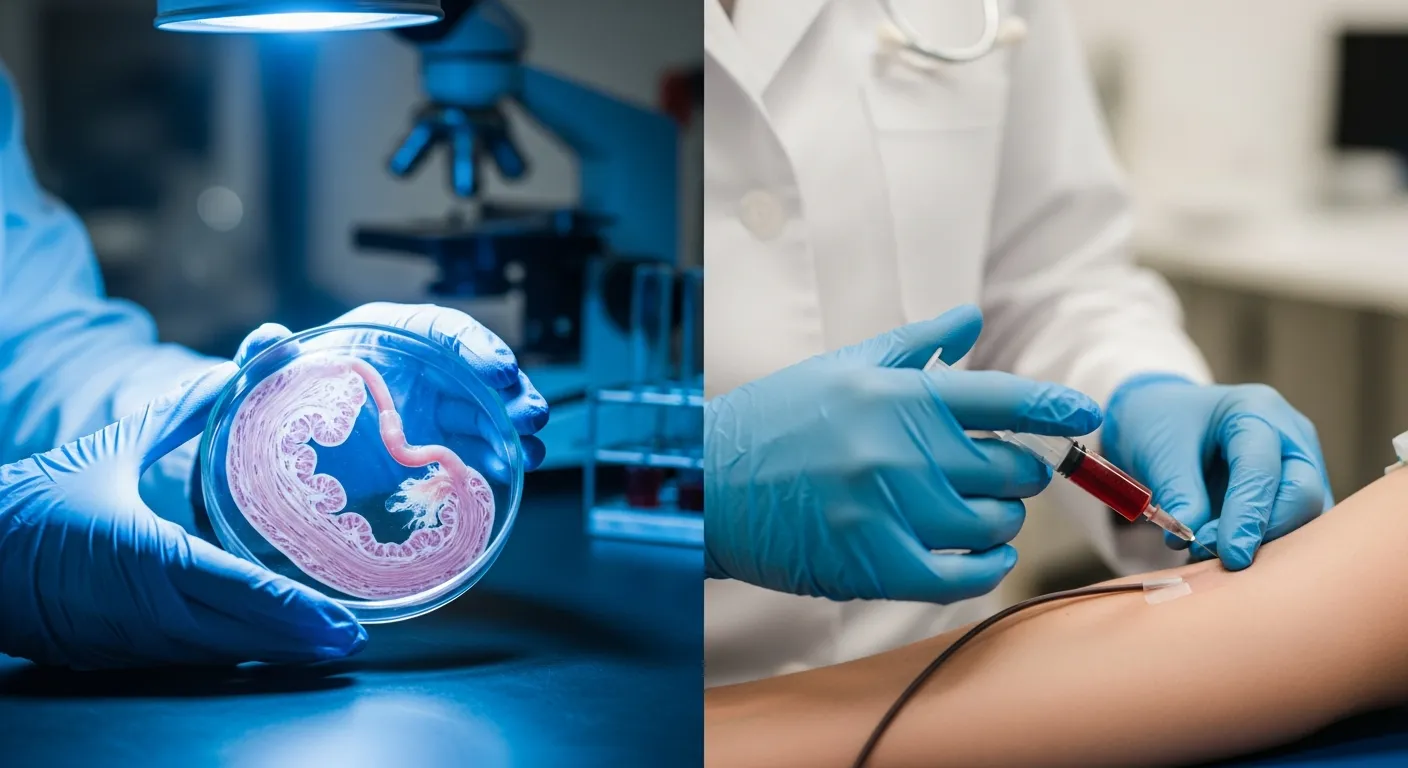
When patients are told they will receive 'mesenchymal stem cell therapy', they often assume there is one standard product. There is not. The two dominant sources of MSCs in clinical use today — Wharton's jelly from donated umbilical cords and autologous cells from the patient's own bone marrow or fat — are biologically distinct, manufactured under completely different processes, and have meaningfully different therapeutic profiles.
Choosing between them is one of the most important decisions in any stem cell treatment plan. The right answer depends on your age, your condition, the cell dose required, your tolerance for an additional surgical harvest, and the regulatory environment in which you are being treated. This guide compares the two head-to-head using current 2026 clinical evidence and explains how leading clinics decide which to recommend.
An important point upfront: this is not a debate of 'good versus bad'. Both Wharton's jelly and autologous MSCs have legitimate clinical uses, and many leading regenerative medicine programmes use both depending on the indication. The question is which is right for your specific situation.
What Are Wharton's Jelly MSCs?
Wharton's jelly is the gelatinous tissue inside the umbilical cord. After ethically donated full-term births, this tissue can be processed in GMP laboratories to isolate young, highly potent mesenchymal stem cells.
Origin
Mesenchymal stem cells extracted from the Wharton's jelly tissue of donated umbilical cords from healthy, screened mothers after full-term, consented births. The cord is normally medical waste.
Cell Age
These are 'young' MSCs, biologically zero days old at extraction. They have not undergone the decades of replicative ageing that affect adult cells, which translates to higher proliferation capacity and stronger paracrine signalling.
Cell Potency
Wharton's jelly MSCs show stronger anti-inflammatory cytokine profiles, higher growth factor secretion, and greater differentiation capacity compared to bone marrow or adipose MSCs from older adult donors.
Manufacturing
Cells are expanded under GMP conditions to produce standardised, characterised batches with verified phenotype, viability, sterility, and potency before clinical use.
Allogeneic Source
Because the cells come from a donor and not the patient, they are 'allogeneic'. MSCs are immune-privileged due to low MHC-II expression, allowing safe use across patients without HLA matching.
Dose Flexibility
Allogeneic manufacturing allows precise, high doses (often 100-300 million cells per infusion) without the limitation of how much can be harvested from a single patient.
Autologous Bone Marrow & Adipose MSCs
Autologous cells come from the patient's own body. The two most common harvest sources are bone marrow aspirate (typically from the iliac crest) and adipose tissue (from a small mini-liposuction).
Bone Marrow Origin
Cells are aspirated from the posterior iliac crest under local anaesthesia. The aspirate contains a mixed cell population including MSCs, hematopoietic stem cells, and growth-factor-rich plasma.
Adipose Origin
A small volume of fat (typically 50-200 mL) is harvested via mini-liposuction, then enzymatically or mechanically processed to release the stromal vascular fraction containing MSCs.
No Immune Concerns
Because the cells are the patient's own, there is no risk of immune rejection, no need for HLA matching, and no allogeneic regulatory considerations. This is the strongest safety profile available.
Same-Day Use
In many jurisdictions (including the US under FDA guidance), autologous cells can be reinjected the same day with minimal manipulation, avoiding lengthy lab processing and additional regulatory pathways.
Patient-Specific Potency
MSC quality varies with donor age, health status, and metabolic conditions. A 70-year-old's MSCs are biologically older, less proliferative, and produce fewer growth factors than those from a young donor.
Limited Cell Yield
A standard bone marrow aspirate yields a relatively small number of true MSCs. To reach therapeutic doses, the cells generally require ex-vivo expansion, which can take 2-4 weeks.
The Age Effect: Why Cell Source Matters More After 50
The single biggest clinical factor in this comparison is the patient's age. MSCs accumulate biological wear with the rest of the body. A patient in their 30s harvesting their own bone marrow MSCs gets cells that are biologically in their 30s — generally still vigorous, with good proliferative capacity and growth factor output. A patient in their 70s harvesting the same way gets MSCs that are biologically in their 70s, with measurably reduced proliferation rates, altered cytokine profiles, and a higher proportion of senescent cells.
Multiple peer-reviewed studies have documented this age-dependent decline. By contrast, Wharton's jelly MSCs are essentially zero days old regardless of recipient age. For older patients with degenerative conditions, this is the clinical case for allogeneic cells: you are getting a younger, more potent product than your own body can supply.
For younger, healthier patients — particularly athletes seeking sports-injury healing, or patients with localised musculoskeletal problems and no systemic disease — autologous cells often perform very well, and the immunological simplicity of using one's own cells is genuinely valuable. The decision should never be one-size-fits-all.
Direct Head-to-Head Comparison
Wharton's Jelly (Allogeneic) MSCs
- Young, biologically zero-day-old cells
- Higher proliferation and growth factor output
- Standardised, characterised, dose-flexible product
- No harvest procedure needed for the patient
- Allows high doses (100-300+ million cells)
- Manufactured under GMP conditions and batch-tested
- Particularly favoured in patients over 50 and for systemic conditions
Autologous Bone Marrow / Adipose MSCs
- No risk of immune-related complications
- No allogeneic regulatory pathway required
- Can be processed and used same-day in many jurisdictions
- Strong evidence base in localised orthopaedic conditions
- Particularly suitable for younger, otherwise healthy patients
- Lower cost where harvest and reinjection are same-day
- Quality is patient-specific and declines with age
Which Source for Which Condition?
These are the general clinical preferences in 2026. Your individual treatment plan should be made by your physician based on your specific case.
Safety: What the Data Actually Shows
The safety record of properly manufactured allogeneic Wharton's jelly MSCs is now extensive. Multiple meta-analyses pooling thousands of patients across hundreds of clinical trials show a low incidence of serious adverse events, with most reactions limited to mild, transient infusion-related symptoms (low-grade fever, headache, fatigue) that resolve within 24-48 hours. The historical concern about immune rejection has largely not materialised, because MSCs naturally express low levels of MHC-II and are immune-privileged.
Autologous cells, by definition, carry essentially no immune risk. Their main safety considerations are related to the harvest procedure itself — bruising, soreness, or rare infection at the harvest site — and to the question of whether the manipulation performed on them stays within minimally manipulated regulatory guidance.
The factor that most determines safety in either case is not the cell source but the manufacturing environment. A Wharton's jelly cell product processed in a non-GMP facility with poor sterility controls is dangerous; the same cells processed in a JCI-accredited, GMP-licensed laboratory are extremely safe. The question to ask any clinic is not 'are the cells safe' in the abstract, but 'where is your cell product manufactured and what is its certificate of analysis'.
Frequently Asked Questions
International Patient Coordination
StemCell Longevita operates as an international patient coordination platform. We connect patients with licensed medical institutions that provide regenerative medicine applications following physician evaluation and applicable regulatory frameworks. All medical decisions and procedures are conducted exclusively by authorized healthcare professionals. StemCell Longevita does not directly provide medical treatment.
Medical Disclaimer
The information provided on this website is for educational and informational purposes only and is not intended as medical advice. Stem cell therapy is an evolving field, and outcomes may vary by individual. The treatments described on this site have not been fully evaluated or approved by the FDA or equivalent regulatory bodies in all jurisdictions.
The FDA has not approved stem cell applications for most conditions listed on this website. Results mentioned are based on clinical observations, published research, and patient-reported outcomes. Individual results may vary and no specific outcomes are assured for any individual patient.
Inclusion of scientific publications on this website does not imply regulatory approval, and does not imply any clinical outcome for an individual patient. Certain applications may be considered investigational depending on indication and jurisdiction.
Always consult with a qualified healthcare professional before making any medical decisions. Do not disregard professional medical advice or delay seeking treatment based on information found on this website.
Related clinical questions
Where this page sits in the wider picture.