Stem Cell Therapy for Tendinopathy & Chronic Tendon Injury
- Written by
- StemCell Longevita Editorial Team
- Medically reviewed by
- Prof. Dr. Erdal Karaöz TeamProfessor of Histology and Embryology · Medical Director, Center for Regenerative Medicine
- Last reviewed
- Next scheduled review
How we evaluate evidence · Conflict-of-interest disclosure · Editorial standards
Background explainer. Written for readers researching a condition or treatment before deciding anything.
Why mesenchymal stem cell therapy is reshaping treatment of chronic rotator cuff, achilles, patellar, and elbow tendinopathy — for athletes and active adults who do not want surgery.
Why Chronic Tendinopathy Is So Hard to Heal
Tendons are biologically frustrating tissues. They have low blood supply, low cellular activity, and a slow turnover rate even in healthy adults. When a tendon is injured — whether by acute trauma or by years of repetitive microtrauma — its capacity for self-repair is limited. Without intervention, many tendon injuries progress from acute tendinitis (true inflammation) to chronic tendinopathy (a degenerative state with disorganised collagen, abnormal cellular activity, and persistent pain).
Conventional treatment has limited options. Rest reduces irritation but does not stimulate repair. NSAIDs reduce symptoms but may actually impair the inflammatory phase of healing. Corticosteroid injections provide short-term pain relief but accelerate tendon degradation and increase the risk of rupture. Eccentric exercise programmes (Alfredson protocol for achilles, similar for other tendons) are the most evidence-based conservative therapy, but require months of disciplined work and are not universally effective. Surgery is invasive, has long recovery times, and produces variable outcomes.
Mesenchymal stem cell therapy and PRP have emerged in 2026 as the most promising regenerative options for chronic tendinopathy. They address what conventional treatment cannot — the absence of cellular and growth-factor activity that drives the chronic non-healing state. For appropriately selected patients, MSC therapy can deliver substantial pain relief and functional improvement, often allowing return to activity without surgery.
How MSCs Promote Tendon Repair
Stem cell therapy addresses several of the specific deficits that make tendons heal poorly.
Cellular Activation
MSCs and their secreted factors stimulate resident tenocyte proliferation and activity, partially reversing the cellular quiescence that characterises chronic tendinopathy.
Growth Factor Delivery
MSCs release a rich cocktail of growth factors including IGF-1, TGF-beta, BMP-12, and VEGF that drive collagen synthesis, vascular ingrowth, and tissue organisation.
Anti-Inflammatory Action
MSCs suppress the chronic low-grade inflammatory environment that perpetuates tendon degeneration, allowing constructive repair processes to proceed.
Collagen Quality
MSC-treated tendons in animal and clinical studies show better-organised type I collagen architecture, closer to native tendon than scar tissue.
Vascularisation
MSC-secreted angiogenic factors support neovascularisation, providing the blood supply that chronic tendinopathy lacks for sustained repair.
Tendon-Bone Junction
For partial tears at the tendon insertion (rotator cuff in particular), MSCs support the complex enthesis healing that conventional treatment manages poorly.
Tendon Conditions That Respond to MSC Therapy
Tendon injuries with the most consistent positive evidence for regenerative treatment in 2026.
Treatment Protocol & Procedure
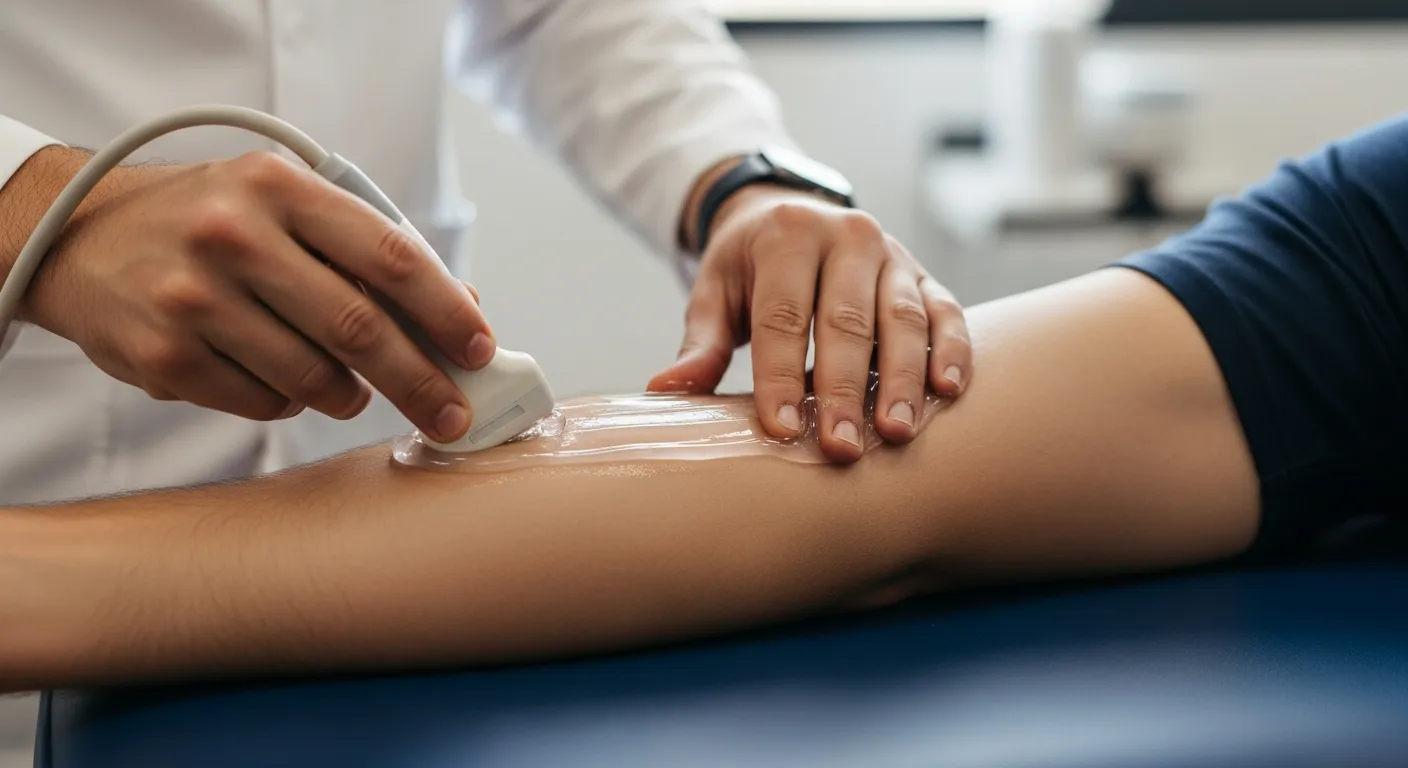
Tendinopathy treatment is typically administered as a targeted ultrasound-guided injection directly into the affected tendon, with the cell product placed precisely at the area of pathology identified on diagnostic imaging. The procedure takes 30-45 minutes, is performed under local anaesthesia, and is well tolerated. Some protocols include a low-dose systemic IV MSC infusion alongside the local injection, particularly when multiple tendons are affected or when the patient has a generalised inflammatory background.
Cell choice depends on patient profile. Younger athletes (under 40) often do well with autologous bone marrow or adipose-derived cells combined with PRP, leveraging the combined growth-factor and cellular signal at lower cost. Older patients and those with multi-site or treatment-resistant tendinopathy generally benefit from allogeneic Wharton's jelly MSCs at higher doses, given the documented age-related decline in autologous cell potency.
Post-procedure, an initial period of relative rest (typically 1-2 weeks) is followed by a structured progressive loading programme. Eccentric and heavy slow resistance loading is essential — the cells provide the biological substrate for healing, but mechanical loading provides the signal that organises the new tissue along functional lines. Skipping the rehabilitation phase substantially reduces the durability of results.
Stem Cell Therapy vs Surgery for Tendinopathy
Surgical Repair
- Necessary for complete tears with retraction
- Significant invasive intervention with anaesthesia
- Long recovery: 4-12 months depending on tendon
- Risk of stiffness, scar tissue, and re-tear
- Variable outcomes for chronic tendinopathy without complete tear
- Substantial cost and procedural risk
MSC + PRP Regenerative Treatment
- Suitable for tendinopathy and partial tears
- Minimally invasive, outpatient injection
- Recovery: 6-12 weeks with structured rehab
- Lower complication risk
- Strong evidence for chronic tendinopathy
- Can avoid or delay surgery in appropriately selected cases
Recovery & Return to Activity Timeline
What to expect in the months following stem cell treatment for tendinopathy.
First 1-2 Weeks
Relative rest with reduced loading. Some patients experience mild post-injection soreness, usually resolving within days. No high-impact activity.
2-6 Weeks
Progressive loading begins under physiotherapy guidance. Eccentric and heavy slow resistance work. Return to low-impact activity (walking, cycling, swimming).
6-12 Weeks
Most patients report substantial pain reduction and functional improvement. Progressive return to running, weight training, and sport-specific activity.
3-6 Months
Full return to high-level athletic activity for most responders. Imaging often shows improved tendon structure on follow-up ultrasound or MRI.
6-12 Months
Continued improvement in tendon strength and quality. Sustained relief in 70-80% of properly selected patients in published series.
Long-Term
Many patients maintain results indefinitely with appropriate ongoing loading and management. A subset benefit from a maintenance treatment 12-24 months later.
Frequently Asked Questions
International Patient Coordination
StemCell Longevita operates as an international patient coordination platform. We connect patients with licensed medical institutions that provide regenerative medicine applications following physician evaluation and applicable regulatory frameworks. All medical decisions and procedures are conducted exclusively by authorized healthcare professionals. StemCell Longevita does not directly provide medical treatment.
Medical Disclaimer
The information provided on this website is for educational and informational purposes only and is not intended as medical advice. Stem cell therapy is an evolving field, and outcomes may vary by individual. The treatments described on this site have not been fully evaluated or approved by the FDA or equivalent regulatory bodies in all jurisdictions.
The FDA has not approved stem cell applications for most conditions listed on this website. Results mentioned are based on clinical observations, published research, and patient-reported outcomes. Individual results may vary and no specific outcomes are assured for any individual patient.
Inclusion of scientific publications on this website does not imply regulatory approval, and does not imply any clinical outcome for an individual patient. Certain applications may be considered investigational depending on indication and jurisdiction.
Always consult with a qualified healthcare professional before making any medical decisions. Do not disregard professional medical advice or delay seeking treatment based on information found on this website.
Related clinical questions
Where this page sits in the wider picture.