
Regenerative Approach for Cartilage Disorders
- Written by
- StemCell Longevita Editorial Team
- Medically reviewed by
- Prof. Dr. Erdal Karaöz TeamProfessor of Histology and Embryology · Medical Director, Center for Regenerative Medicine
- Last reviewed
- Next scheduled review
How we evaluate evidence · Conflict-of-interest disclosure · Editorial standards
Advanced MSC therapy to regenerate damaged cartilage, restore joint cushioning, and eliminate chronic joint pain without invasive surgery.
Can stem cell therapy help cartilage defects?
Mesenchymal stem cell therapy is not an approved treatment for adult cartilage defects. Cell-based procedures with regulatory approval exist for focal chondral defects — most notably autologous chondrocyte implantation and matrix-associated variants — used in selected patients. MSC-based injection alone has variable and inconsistent evidence. Established management — physiotherapy, activity modification, and surgical cartilage-repair techniques when indicated — remains the evidence-based path.
Key facts
- MSC injection status
- Not approved as a stand-alone cartilage-defect therapy
- Approved cell procedures
- ACI/MACI for selected focal chondral defects
- Standard care
- PT, activity modification, surgical cartilage repair when indicated
What we know
- Autologous chondrocyte implantation is a regulator-approved cell therapy for selected focal cartilage defects.
What remains uncertain
- Whether MSC injection provides added value over established cartilage-repair techniques in comparable patients.
Medically reviewed questions
This summary is general medical information, not medical advice, and not a promise of benefit. Figures are quoted ranges, confirmed in writing after a medical review.
Medically reviewed by: Prof. Dr. Erdal Karaöz · Last updated: · Editorial and evidence policy
Evidence at a glance — Focal cartilage defects
A plain summary of what the published research does and does not show for this condition. It is written to the same standard whether the evidence is strong or weak.
- Human studies available?
- Yes — including controlled studies
- Randomised trials?
- A small number of randomised trials, plus comparative surgical series
- Main outcomes studied
- Defect fill on MRI
- Pain and function
- Return to activity
- Reoperation rate
- Long-term evidence
- Limited
- Regulatory approval for this indication
- United States (FDA): No FDA-approved mesenchymal stem cell product for this indication. The FDA has issued consumer warnings about unapproved stem cell products.
- European Union (EMA): No EMA-authorised mesenchymal stem cell medicine for this indication.
- United Kingdom (MHRA): No MHRA-authorised mesenchymal stem cell medicine for this indication.
- Türkiye (Ministry of Health): In Türkiye, cell therapies are delivered only inside Ministry of Health–licensed centres under the regenerative medicine / advanced therapy regulations, as clinical research or individual (exceptional) use — not as an approved routine treatment for this indication.
- Role at our centre
- Supportive consideration alongside standard care
What kind of evidence exists
- Mechanism (laboratory): Documented
- Animal / preclinical: Documented
- Early human (phase 1/2, uncontrolled): Documented
- Controlled human (randomised or sham-controlled): Documented
- Regulatory approval: Not established
Sources
- Systematic reviews and meta-analyses — Focal cartilage defects — PubMed
- Randomised controlled trials — Focal cartilage defects — PubMed
- Registered MSC trials — Focal cartilage defects — ClinicalTrials.gov
- FDA — Consumer alert on regenerative medicine therapies — U.S. Food and Drug Administration, 2024
- Advanced therapy medicinal products: overview — European Medicines Agency, 2025
- ISSCR Guidelines for Stem Cell Research and Clinical Translation — International Society for Stem Cell Research, 2021
- ISSCR Patient Handbook on Stem Cell Therapies — International Society for Stem Cell Research, 2020
Source links open filtered searches of PubMed and ClinicalTrials.gov plus regulator and professional-society pages, so you can read the current evidence yourself rather than a selected extract.
This summary is general information about the evidence base, not medical advice and not a promise of benefit. Whether any treatment is appropriate for you can only be decided after a medical review of your records.
Understanding Cartilage Disorders
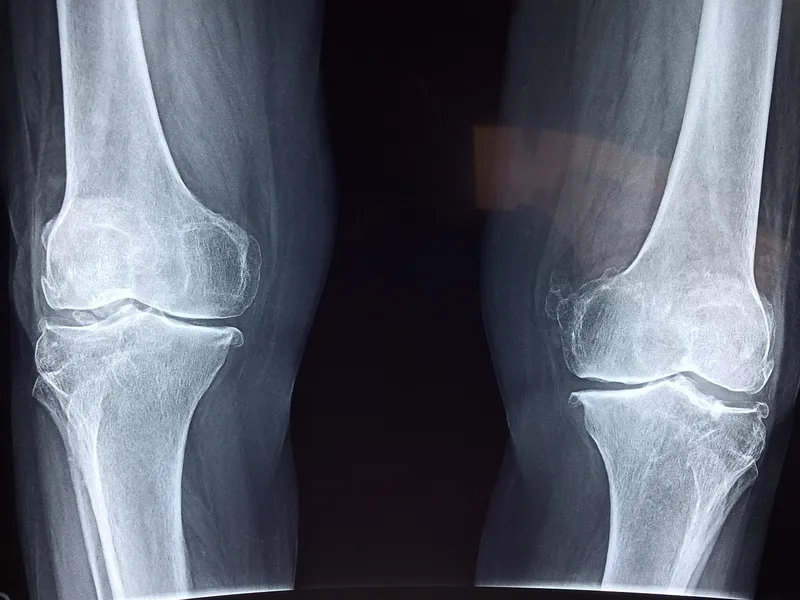
Cartilage disorders encompass a range of conditions where the smooth, protective tissue covering joint surfaces becomes damaged, thinned, or deteriorated. Unlike bone, cartilage has very limited natural healing capacity due to its lack of blood supply, making regeneration a significant clinical challenge.
Articular cartilage damage can result from acute trauma, repetitive stress, degenerative processes, or inflammatory conditions. Without intervention, cartilage loss progresses, leading to bone-on-bone contact, chronic pain, reduced mobility, and eventual need for joint replacement surgery.
Mesenchymal stem cell therapy represents a breakthrough approach to cartilage regeneration. MSCs can differentiate into chondrocytes, the specialized cells that produce and maintain cartilage matrix, while also creating an anti-inflammatory environment that protects remaining healthy cartilage from further degradation.
Types of Cartilage Disorders We Treat
Our regenerative protocols address multiple types of cartilage damage across various joints, with treatment plans tailored to each patient's specific condition.
Articular cartilage defects are focal areas of damage on the joint surface, often caused by sports injuries or trauma. MSC therapy promotes chondrocyte proliferation and new matrix formation at these sites.
Chondromalacia patellae involves softening and deterioration of the cartilage on the underside of the kneecap, causing anterior knee pain. Stem cells address both the structural damage and the inflammatory cascade driving cartilage breakdown.
Osteochondral lesions involve damage to both the cartilage and underlying bone, commonly affecting the knee, ankle, and elbow joints. Our protocols deliver MSCs to regenerate both tissue layers simultaneously.
How Stem Cells Help Cartilage Disorders
Cartilage Regeneration
MSCs differentiate into chondrocytes and stimulate new cartilage matrix production in damaged joints.
Reduced Inflammation
Anti-inflammatory cytokines calm joint inflammation and protect remaining cartilage from further degradation.
Improved Mobility
Restored cartilage cushioning reduces bone-on-bone contact, improving joint range of motion and function.
Pain Relief
Addressing the root cause of cartilage loss provides lasting pain relief without repeated steroid injections.
Patient Experiences
Real outcomes from patients who chose regenerative medicine at StemCell Longevita Istanbul
"My orthopaedic surgeon in Munich said I'd need a new knee within a year. After regenerative medicine in Istanbul, that was two years ago and I still don't need it."
"I spent years managing pain instead of living. The treatment in Turkey gave me my active life back — something I didn't think was possible at my age."
Your Treatment Journey
Our image-guided approach ensures precise stem cell delivery to damaged cartilage for optimal regeneration results.
Step 01: Comprehensive Joint Assessment
MRI imaging, physical examination, and evaluation of cartilage damage severity and joint health.
Step 02: Personalized Protocol
Custom treatment plan based on the specific cartilage disorder, affected joints, and patient goals.
Step 03: MSC Preparation
High-quality mesenchymal stem cells prepared from Wharton's jelly with 97% viability guarantee.
Step 04: Targeted Delivery
Image-guided injection to deliver stem cells precisely to the areas of cartilage damage.
Step 05: Rehabilitation Support
Post-treatment physical therapy guidance and follow-up assessments to track cartilage regeneration.
Expert Care
Board-Certified Specialists
Our orthopedic specialists use advanced MRI and ultrasound imaging to precisely map cartilage damage and deliver stem cells to the exact areas requiring regeneration, maximizing treatment effectiveness.
Frequently Asked Questions
All Regenerative Medicine Applications
Explore our comprehensive range of regenerative medicine applications for various conditions. Click any option to learn more.
Related Articles
Explore our in-depth research articles and guides on related treatments and therapies.
Spinal Cord Injury Rehabilitation with Stem Cells
Learn about advanced regenerative medicine applications that are supporting patients with spinal cord injuries in regaining sensation and mobility through physician-directed protocols.
Read ArticleUnderstanding Regenerative Medicine: A Complete Guide
A comprehensive overview of stem cell therapy, including types of stem cells, care processes, safety considerations, and what patients can expect during their wellness journey.
Read ArticleComplete Guide to Stem Cells and Their Types
Explore the different types of stem cells - adult, fetal, embryonic, and cord blood - their unique characteristics, therapeutic applications, and how they're advancing regenerative medicine.
Read ArticleRelated clinical questions
Where this page sits in the wider picture.