Regenerative Approach for Tennis Elbow & Golfer's Elbow
- Written by
- StemCell Longevita Editorial Team
- Medically reviewed by
- Prof. Dr. Erdal Karaöz TeamProfessor of Histology and Embryology · Medical Director, Center for Regenerative Medicine
- Last reviewed
- Next scheduled review
How we evaluate evidence · Conflict-of-interest disclosure · Editorial standards
Advanced regenerative treatment for lateral and medial epicondylitis. Repair damaged tendons and restore pain-free arm function without surgery.
Can stem cell therapy help tennis elbow?
Mesenchymal stem cell therapy is not an approved treatment for lateral epicondylitis (tennis elbow). Randomised PRP trials in tennis elbow have shown modest benefit versus corticosteroid injection at 6-12 months; MSC-based injection data are smaller and less consistent. Established management — activity modification, eccentric loading physiotherapy, and, where refractory, PRP or shockwave — remains the evidence-based path.
Key facts
- Approval status
- Not approved for tennis elbow
- PRP evidence
- Modest benefit at 6-12 months in controlled trials
- Standard care
- Eccentric loading, activity modification, shockwave where refractory
What we know
- Eccentric wrist-extensor loading has evidence and is the first-line rehabilitation approach.
What remains uncertain
- Whether MSC injection outperforms PRP or rehabilitation alone in tennis elbow.
Medically reviewed questions
This summary is general medical information, not medical advice, and not a promise of benefit. Figures are quoted ranges, confirmed in writing after a medical review.
Medically reviewed by: Prof. Dr. Erdal Karaöz · Last updated: · Editorial and evidence policy
Evidence at a glance — Lateral epicondylitis (tennis elbow)
A plain summary of what the published research does and does not show for this condition. It is written to the same standard whether the evidence is strong or weak.
- Human studies available?
- Yes — early-stage only
- Randomised trials?
- Isolated small randomised trials
- Main outcomes studied
- Pain
- Grip strength
- Function
- Long-term evidence
- Very limited
- Regulatory approval for this indication
- United States (FDA): No FDA-approved mesenchymal stem cell product for this indication. The FDA has issued consumer warnings about unapproved stem cell products.
- European Union (EMA): No EMA-authorised mesenchymal stem cell medicine for this indication.
- United Kingdom (MHRA): No MHRA-authorised mesenchymal stem cell medicine for this indication.
- Türkiye (Ministry of Health): In Türkiye, cell therapies are delivered only inside Ministry of Health–licensed centres under the regenerative medicine / advanced therapy regulations, as clinical research or individual (exceptional) use — not as an approved routine treatment for this indication.
- Role at our centre
- Research context — considered only where standard care is exhausted or unsuitable, and never as a replacement for it
What kind of evidence exists
- Mechanism (laboratory): Documented
- Animal / preclinical: Documented
- Early human (phase 1/2, uncontrolled): Documented
- Controlled human (randomised or sham-controlled): Not established
- Regulatory approval: Not established
Sources
- Systematic reviews and meta-analyses — Lateral epicondylitis (tennis elbow) — PubMed
- Randomised controlled trials — Lateral epicondylitis (tennis elbow) — PubMed
- Registered MSC trials — Lateral epicondylitis (tennis elbow) — ClinicalTrials.gov
- FDA — Consumer alert on regenerative medicine therapies — U.S. Food and Drug Administration, 2024
- Advanced therapy medicinal products: overview — European Medicines Agency, 2025
- ISSCR Guidelines for Stem Cell Research and Clinical Translation — International Society for Stem Cell Research, 2021
- ISSCR Patient Handbook on Stem Cell Therapies — International Society for Stem Cell Research, 2020
Source links open filtered searches of PubMed and ClinicalTrials.gov plus regulator and professional-society pages, so you can read the current evidence yourself rather than a selected extract.
This summary is general information about the evidence base, not medical advice and not a promise of benefit. Whether any treatment is appropriate for you can only be decided after a medical review of your records.
What is Tennis Elbow?
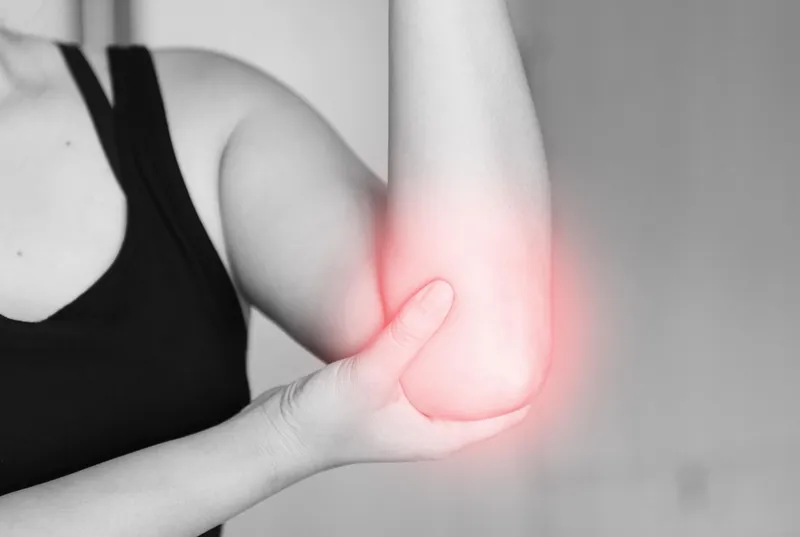
Tennis elbow (lateral epicondylitis) is a painful condition affecting the tendons on the outside of the elbow. It's caused by overuse and repetitive strain, leading to small tears in the tendon that don't heal properly.
Despite its name, tennis elbow commonly affects people who don't play tennis. Any repetitive arm motion can cause this condition. Similarly, golfer's elbow affects the inner side of the elbow from similar overuse patterns.
Common Symptoms:
- Pain on the outer part of the elbow
- Weak grip strength
- Pain when lifting or gripping objects
- Stiffness in the forearm
- Pain that radiates down the forearm
- Difficulty with simple tasks like opening jars
Common Causes:
- Tennis and racquet sports
- Golf (Golfer's elbow affects the inner side)
- Repetitive computer mouse use
- Painting and decorating
- Carpentry and manual labor
- Cooking and food preparation
How Stem Cells Help
Our regenerative approach repairs the damaged tendon tissue rather than just treating symptoms.
Targeted Repair
Stem cells directly target the damaged tendons in the elbow for precise healing.
Reduced Inflammation
Treatment significantly reduces inflammation and pain at the injury site.
Restored Function
Regenerate damaged tissue to restore grip strength and arm function.
Accelerated Healing
Speed up the natural healing process with regenerative medicine.
How Stem Cells Work for Tennis Elbow
Mesenchymal regenerative medicine approach for lateral and medial epicondylitis (tennis and golfer's elbow) targets the degenerative tendon changes at the elbow that cause chronic pain and grip weakness. Clinical studies suggest MSCs can repair the damaged extensor or flexor tendon origin and restore normal elbow function.
MSCs promote the regeneration of the common extensor tendon at the lateral epicondyle by stimulating tenocyte activity and organized collagen production. This targeted repair addresses the angiofibroblastic degeneration that characterizes chronic tennis elbow.
Stem cells secrete growth factors including platelet-derived growth factor (PDGF) and insulin-like growth factor (IGF-1) that accelerate tendon healing at the epicondylar attachment. Clinical studies suggest these trophic factors enhance the structural quality of the repaired tendon tissue.
MSC therapy reduces the neurogenic inflammation that contributes to the persistent pain of epicondylitis. By modulating pain-signaling pathways and calcitonin gene-related peptide (CGRP) release, stem cells address both the structural damage and associated pain.
Research indicates that MSCs improve local blood flow to the poorly vascularized tendon-bone junction at the epicondyle. Enhanced microcirculation delivers healing factors to the damaged tissue and accelerates the resolution of chronic tendinopathy.
Who Is a Good Candidate?
Eligibility for regenerative medicine approach for tennis or golfer's elbow is assessed through clinical examination, provocative testing, and imaging evaluation. Our specialists identify patients with chronic epicondylitis who have exhausted conservative treatments.
Ideal Candidates
- Patients with chronic lateral or medial epicondylitis persisting for more than three months
- Individuals with imaging-confirmed tendon degeneration at the epicondylar origin
- Patients who have not responded to rest, bracing, physical therapy, or corticosteroid injections
- Those whose elbow pain significantly impacts work performance or daily activities
- Active individuals and athletes with recurrent epicondylitis affecting grip strength and arm function
May Not Be Suitable
- Patients with complete tendon tears at the epicondyle requiring surgical repair
- Individuals with elbow instability or significant ligament damage
- Patients with cervical radiculopathy mimicking epicondylitis symptoms
- Those with active infection or skin conditions at the elbow treatment site
What Results Can You Expect?
Recovery following regenerative medicine approach for tennis or golfer's elbow is progressive, with most patients experiencing meaningful improvement within the first few months. Outcomes depend on the duration and severity of the condition and commitment to rehabilitation.
Initial Recovery
Local soreness at the injection site and temporary increase in elbow sensitivity. The arm should be rested from aggravating gripping and twisting activities during this initial healing phase.
Early Improvements
Gradual reduction in elbow pain, particularly during gripping activities. Many patients notice improved comfort during daily tasks such as typing, lifting objects, and turning doorknobs.
Progressive Results
Continued strengthening of the repaired tendon tissue. Patients typically report significantly reduced pain and improved grip strength. Progressive resistance exercises are introduced.
Optimal Results
Substantial pain relief and restored elbow function. Most patients can return to sports and manual activities with minimal or no discomfort. Grip strength approaches pre-injury levels.
Long-Term Benefits
Sustained relief with ongoing tendon maturation. The risk of recurrence is reduced compared to corticosteroid treatments. Proper ergonomics and strengthening exercises help maintain long-term results.
Individual results vary. These timelines are based on clinical observations and are not guaranteed outcomes. Your specialist will provide personalized expectations during your consultation.
Your approach Journey
Our ultrasound-guided injection technique ensures precise delivery of stem cells directly to the damaged tendon for optimal healing.
Step 01: Orthopedic Evaluation
Complete assessment including physical examination, imaging review, and pain evaluation.
Step 02: Care Planning
Our specialists create a personalized care plan based on injury severity and your goals.
Step 03: Stem Cell Preparation
High-concentration mesenchymal stem cells are prepared for targeted injection.
Step 04: Precision Injection
Ultrasound-guided injection ensures stem cells are delivered precisely to the damaged tendon.
Step 05: Rehabilitation Protocol
Follow-up care with rehabilitation guidance to optimize healing and prevent recurrence.
Expert Orthopedic Care
Our Expert Doctors
Our orthopedic specialists use advanced ultrasound guidance to precisely target the damaged tendon tissue. This minimally invasive approach maximizes the effectiveness of regenerative medicine application while minimizing discomfort.
Patient Experiences
Real outcomes from patients who chose regenerative medicine at StemCell Longevita Istanbul
"My orthopaedic surgeon in Munich said I'd need a new knee within a year. After regenerative medicine in Istanbul, that was two years ago and I still don't need it."
"I spent years managing pain instead of living. The treatment in Turkey gave me my active life back — something I didn't think was possible at my age."
Frequently Asked Questions
Watch Our Patient Stories & Expert Insights
See real results and hear from our medical team about stem cell therapy treatments, procedures, and patient outcomes.
All Regenerative Medicine Applications
Explore our comprehensive range of regenerative medicine applications for various conditions. Click any option to learn more.
Related Articles
Explore our in-depth research articles and guides on related treatments and therapies.
Spinal Cord Injury Rehabilitation with Stem Cells
Learn about advanced regenerative medicine applications that are supporting patients with spinal cord injuries in regaining sensation and mobility through physician-directed protocols.
Read ArticleUnderstanding Regenerative Medicine: A Complete Guide
A comprehensive overview of stem cell therapy, including types of stem cells, care processes, safety considerations, and what patients can expect during their wellness journey.
Read ArticleComplete Guide to Stem Cells and Their Types
Explore the different types of stem cells - adult, fetal, embryonic, and cord blood - their unique characteristics, therapeutic applications, and how they're advancing regenerative medicine.
Read ArticleHow Much Does This Cost Worldwide?
Compare this regenerative medicine costs at StemCell Longevita versus clinics in other countries.
| Country | Typical Cost |
|---|---|
| United States | $15,000 – $25,000 |
| United Kingdom | £12,000 – £20,000 |
| Germany | €15,000 – €25,000 |
| South Korea | $12,000 – $20,000 |
| StemCell Longevita (Turkey) | From £5,900 |
Prices based on market research of comparable stem cell clinics offering umbilical cord-derived MSC treatments (2025-2026). Actual prices vary by clinic, cell count, and condition.
Related clinical questions
Where this page sits in the wider picture.