Regenerative Approach for Osteoporosis
- Written by
- StemCell Longevita Editorial Team
- Medically reviewed by
- Prof. Dr. Erdal Karaöz TeamProfessor of Histology and Embryology · Medical Director, Center for Regenerative Medicine
- Last reviewed
- Next scheduled review
How we evaluate evidence · Conflict-of-interest disclosure · Editorial standards
Advanced regenerative treatment to strengthen bones and reduce fracture risk. Stimulate new bone growth and improve bone density naturally.
Can stem cell therapy help osteoporosis?
Mesenchymal stem cell therapy is not an approved treatment for osteoporosis. There is essentially no controlled clinical evidence that systemic MSC administration improves bone-mineral density or reduces fracture risk. Established therapies — bisphosphonates, denosumab, teriparatide, romosozumab in selected patients, alongside calcium, vitamin D, and fall-risk management — have strong evidence and remain the mainstay.
Key facts
- Approval status
- Not approved for osteoporosis
- Evidence
- No controlled trials showing BMD or fracture-risk benefit
- Standard care
- Bisphosphonates, denosumab, teriparatide, romosozumab in selected patients
What we know
- Approved osteoporosis therapies have randomised evidence for fracture-risk reduction.
What remains uncertain
- Whether any regenerative modality has a mechanism relevant to systemic bone mineralisation.
Medically reviewed questions
This summary is general medical information, not medical advice, and not a promise of benefit. Figures are quoted ranges, confirmed in writing after a medical review.
Medically reviewed by: Prof. Dr. Erdal Karaöz · Last updated: · Editorial and evidence policy
Evidence at a glance — Osteoporosis
A plain summary of what the published research does and does not show for this condition. It is written to the same standard whether the evidence is strong or weak.
- Human studies available?
- Limited
- Randomised trials?
- None identified in humans
- Main outcomes studied
- Bone mineral density
- Fracture incidence
- Bone turnover markers
- Long-term evidence
- Very limited
- Regulatory approval for this indication
- United States (FDA): No FDA-approved mesenchymal stem cell product for this indication. The FDA has issued consumer warnings about unapproved stem cell products.
- European Union (EMA): No EMA-authorised mesenchymal stem cell medicine for this indication.
- United Kingdom (MHRA): No MHRA-authorised mesenchymal stem cell medicine for this indication.
- Türkiye (Ministry of Health): In Türkiye, cell therapies are delivered only inside Ministry of Health–licensed centres under the regenerative medicine / advanced therapy regulations, as clinical research or individual (exceptional) use — not as an approved routine treatment for this indication.
- Role at our centre
- Research context — considered only where standard care is exhausted or unsuitable, and never as a replacement for it
What kind of evidence exists
- Mechanism (laboratory): Documented
- Animal / preclinical: Documented
- Early human (phase 1/2, uncontrolled): Documented
- Controlled human (randomised or sham-controlled): Not established
- Regulatory approval: Not established
Sources
- Systematic reviews and meta-analyses — Osteoporosis — PubMed
- Randomised controlled trials — Osteoporosis — PubMed
- Registered MSC trials — Osteoporosis — ClinicalTrials.gov
- FDA — Consumer alert on regenerative medicine therapies — U.S. Food and Drug Administration, 2024
- Advanced therapy medicinal products: overview — European Medicines Agency, 2025
- ISSCR Guidelines for Stem Cell Research and Clinical Translation — International Society for Stem Cell Research, 2021
- ISSCR Patient Handbook on Stem Cell Therapies — International Society for Stem Cell Research, 2020
Source links open filtered searches of PubMed and ClinicalTrials.gov plus regulator and professional-society pages, so you can read the current evidence yourself rather than a selected extract.
This summary is general information about the evidence base, not medical advice and not a promise of benefit. Whether any treatment is appropriate for you can only be decided after a medical review of your records.
Rebuilding Bone Health
Osteoporosis is a condition where bones become weak and brittle due to loss of bone mass and density. This makes bones more susceptible to fractures, particularly in the hip, spine, and wrist.
Our regenerative medicine approach uses mesenchymal stem cells that can differentiate into bone-building cells (osteoblasts). This regenerative approach aims to stimulate new bone formation and improve overall bone density.
Risk Factors:
- Age over 50 years
- Post-menopausal women
- Family history of osteoporosis
- Low body weight or small frame
- Smoking and excessive alcohol use
- Sedentary lifestyle
- Long-term corticosteroid use
Treatment Goals:
- Stimulate new bone cell production
- Increase overall bone density
- Reduce fracture risk
- Improve bone structure and strength
- Slow or support recovery from bone loss progression
How Stem Cells Help
Our regenerative approach targets the root cause of bone loss by stimulating natural bone regeneration.
Bone Regeneration
Stem cells stimulate the production of new bone cells to increase bone density.
Fracture Prevention
Stronger bones reduce the risk of fractures from falls or minor impacts.
Improved Bone Density
Treatment aims to support recovery from bone loss and improve overall bone mass.
Enhanced Mobility
Healthier bones support better mobility and active lifestyle.
How Stem Cells Work for Osteoporosis
Mesenchymal regenerative medicine approach for osteoporosis targets the imbalance between bone formation and bone resorption that leads to progressive bone density loss. Clinical studies suggest MSCs can stimulate osteoblast activity, improve bone mineral density, and enhance the structural integrity of osteoporotic bone.
MSCs differentiate into osteoblasts, the cells responsible for forming new bone tissue, thereby directly contributing to increased bone formation. This osteogenic activity helps counteract the accelerated bone resorption that characterizes osteoporosis.
Stem cells secrete osteogenic growth factors including bone morphogenetic proteins (BMPs) and Wnt signaling molecules that activate resident bone-forming cells. Clinical studies suggest this paracrine stimulation enhances osteoblastogenesis and increases the rate of new bone matrix deposition.
MSC therapy modulates the RANKL/OPG signaling pathway, which governs osteoclast formation and activity. By increasing osteoprotegerin (OPG) production and reducing RANKL expression, stem cells help suppress excessive bone resorption and restore the bone remodeling balance.
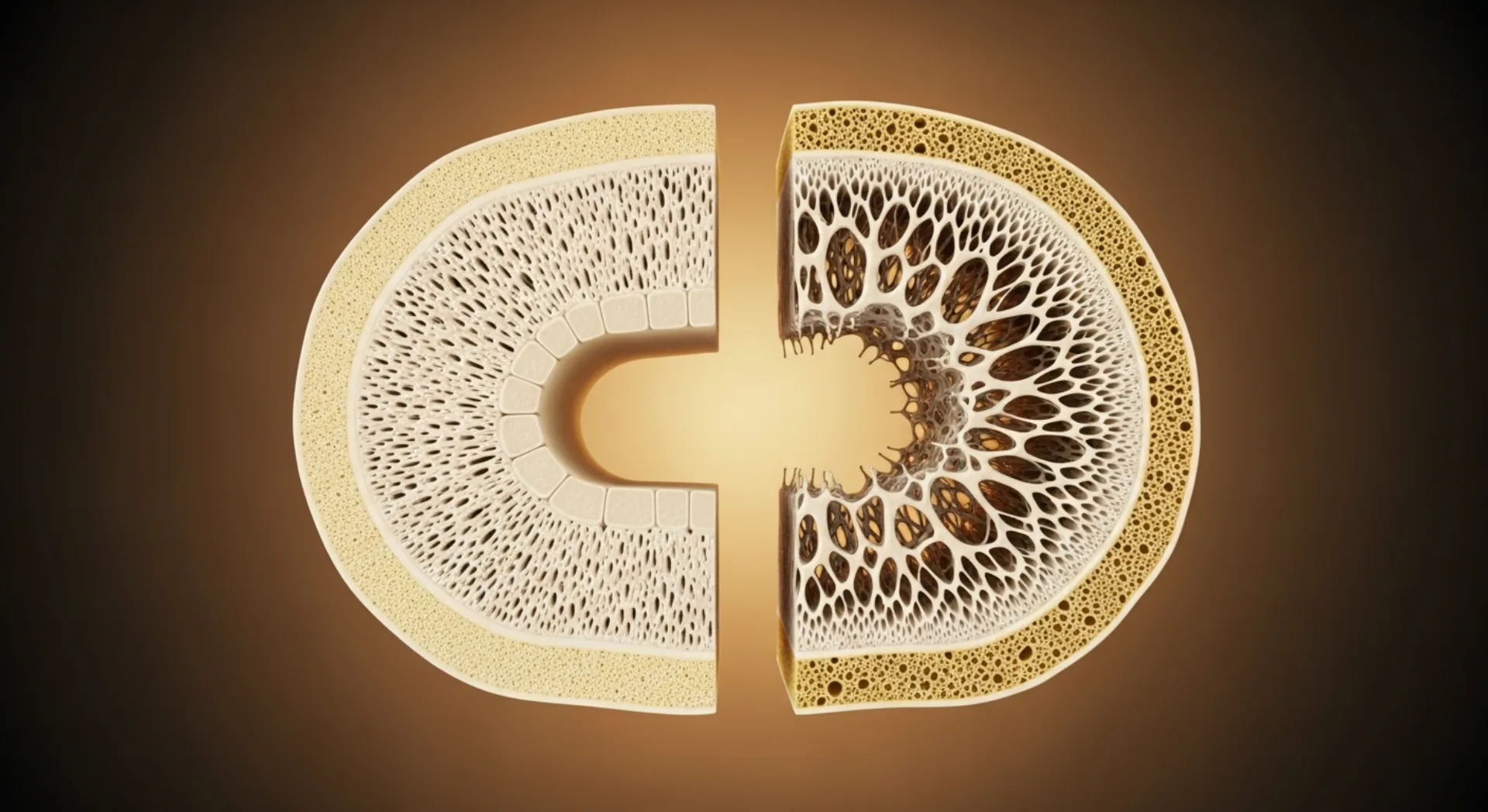
Research indicates that MSCs improve the microarchitecture of trabecular bone by promoting the formation of interconnected bone trabeculae. This structural enhancement improves bone strength beyond what is reflected by bone density measurements alone, reducing fracture risk.
Who Is a Good Candidate?
Candidacy for regenerative medicine approach in osteoporosis is determined through bone density testing (DEXA scan), fracture risk assessment, and evaluation of contributing factors. Our specialists identify patients who may benefit from regenerative approaches to complement standard osteoporosis management.
Ideal Candidates
- Patients with osteoporosis or severe osteopenia confirmed by DEXA scan (T-score of -2.5 or lower)
- Individuals who have experienced fragility fractures despite conventional osteoporosis treatment
- Patients who cannot tolerate or have contraindications to standard anti-resorptive medications
- Those with secondary osteoporosis caused by corticosteroid use, hormonal deficiencies, or metabolic conditions
- Postmenopausal women and aging adults seeking proactive bone health support alongside standard care
May Not Be Suitable
- Patients with bone malignancies or metastatic bone disease
- Individuals with untreated hyperparathyroidism or other metabolic bone disorders
- Patients currently undergoing radiation therapy to bone structures
- Those with active osteomyelitis or bone infections
What Results Can You Expect?
Bone density improvement following the regenerative approach is a slow biological process, as bone remodeling occurs over extended periods. Results are influenced by the severity of osteoporosis, nutritional status, hormonal balance, and adherence to complementary approachs.
Initial Recovery
Minimal recovery is required following intravenous stem cell administration. Patients may experience mild fatigue. Continuation of calcium, vitamin D, and prescribed osteoporosis medications is important.
Early Improvements
Stem cells begin to engraft and stimulate osteoblast activity. While bone density changes are not yet measurable, some patients report improved energy levels and reduced bone pain.
Progressive Results
Ongoing bone formation and remodeling processes. Biochemical markers of bone turnover may show favorable shifts toward increased bone formation. Patients often report feeling more confident in daily activities.
Optimal Results
Measurable improvements in bone biomarkers and early changes in bone density may be detected. Enhanced bone strength and reduced fracture risk begin to manifest clinically.
Long-Term Benefits
Follow-up DEXA scans may reveal improved bone mineral density. Continued bone remodeling provides cumulative benefits. Maintenance treatments and lifestyle modifications help sustain bone health gains.
Individual results vary. These timelines are based on clinical observations and are not guaranteed outcomes. Your specialist will provide personalized expectations during your consultation.
Your approach Journey
Our comprehensive approach includes thorough evaluation, personalized treatment, and ongoing monitoring to ensure optimal bone health improvement.
Step 01: Bone Health Assessment
Comprehensive evaluation including DEXA scan, blood tests, and medical history review.
Step 02: Care Planning
Our specialists develop a personalized treatment protocol based on your bone density levels.
Step 03: Stem Cell Preparation
High-quality mesenchymal stem cells are prepared for your bone regeneration treatment.
Step 04: Treatment Administration
Stem cells are administered via IV infusion to reach bone tissue throughout the body.
Step 05: Ongoing Monitoring
Follow-up DEXA scans and consultations to track bone density improvement.
Expert Care
Our Expert Doctors
Our specialists have extensive experience in treating bone disorders with regenerative medicine. We use the latest protocols and monitor your progress through regular DEXA scans to ensure optimal outcomes.
Patient Experiences
Real outcomes from patients who chose regenerative medicine at StemCell Longevita Istanbul
"My orthopaedic surgeon in Munich said I'd need a new knee within a year. After regenerative medicine in Istanbul, that was two years ago and I still don't need it."
"I spent years managing pain instead of living. The treatment in Turkey gave me my active life back — something I didn't think was possible at my age."
Frequently Asked Questions
Watch Our Patient Stories & Expert Insights
See real results and hear from our medical team about stem cell therapy treatments, procedures, and patient outcomes.
All Regenerative Medicine Applications
Explore our comprehensive range of regenerative medicine applications for various conditions. Click any option to learn more.
Related Articles
Explore our in-depth research articles and guides on related treatments and therapies.
Spinal Cord Injury Rehabilitation with Stem Cells
Learn about advanced regenerative medicine applications that are supporting patients with spinal cord injuries in regaining sensation and mobility through physician-directed protocols.
Read ArticleUnderstanding Regenerative Medicine: A Complete Guide
A comprehensive overview of stem cell therapy, including types of stem cells, care processes, safety considerations, and what patients can expect during their wellness journey.
Read ArticleComplete Guide to Stem Cells and Their Types
Explore the different types of stem cells - adult, fetal, embryonic, and cord blood - their unique characteristics, therapeutic applications, and how they're advancing regenerative medicine.
Read ArticleHow Much Does This Cost Worldwide?
Compare this regenerative medicine costs at StemCell Longevita versus clinics in other countries.
| Country | Typical Cost |
|---|---|
| United States | $15,000 – $25,000 |
| United Kingdom | £12,000 – £20,000 |
| Germany | €15,000 – €25,000 |
| South Korea | $12,000 – $20,000 |
| StemCell Longevita (Turkey) | From £5,900 |
Prices based on market research of comparable stem cell clinics offering umbilical cord-derived MSC treatments (2025-2026). Actual prices vary by clinic, cell count, and condition.
Related clinical questions
Where this page sits in the wider picture.